
It’s a stormy night. You’re in your apartment, looking nervously out the window at the trees bending in the wind, when you get a call from your best friend across the street. Her power is out — is yours still on? Suddenly, your living room goes dark. Get out of the building, she says. Meet her downstairs. That’s when you realize you’re not alone. Then everything starts going wrong.
This could easily be the premise of a new Netflix horror show, but instead of simply watching the narrative unfold, you are now part of it. Netflix’s Unhinged, a groundbreaking interactive experience, transforms your smartphone into a vital tool for survival. When your friend calls in the game, your device actually rings in your hand. When the lights go out, you use that same personal device to turn on a flashlight and look around. And when the shadows dancing in the corners start to move, it’s your actual skin you jump out of.
The Evolution of Interactive Storytelling
This is Unhinged, out June 30, a new narrative game that will show up automatically on your Netflix app. Starring Sadie Sink and Zoë Kravitz, the interactive, immersive horror story isn’t a video game in the sense that most people might be familiar with — there’s no console to buy or controller to learn. Instead, your own smartphone becomes your entry into the world, navigating you through a creepy apartment building, fielding phone calls and text messages from friends and neighbors as you scramble to escape.
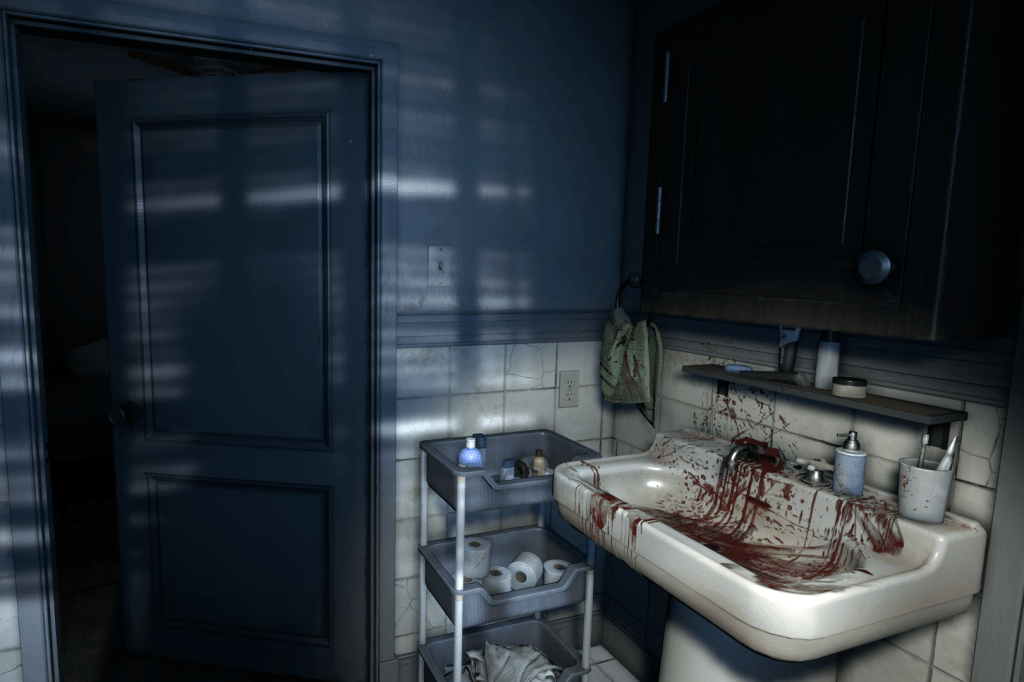
“We’re not coming for Resident Evil,” jokes Sean Krankel, founder of the game developer Night School Studios, which was acquired by Netflix in 2021. “It’s like, ‘I want to play a story,’ as opposed to, ‘I want to get extremely good at or play a game that has a lot of escalating difficulty.’”
Designing for Immersion
The first seed of Unhinged came from a technological breakthrough Night School made about two years ago: the ability to point your personal smartphone at your TV to act as a flashlight. “Instead of trying to make classic game controls, with a joystick and buttons, work on a smartphone screen, we were like, let’s design a totally bespoke thing that makes it feel magical and awesome on your phone,” says Krankel.
They next discovered how to have the audio bounce back and forth between the TV and the phone. When you get a call in the game, the audio comes from the phone, while you’re still hearing ambient noise coming out of your TV. “It was about two or three months of developing a story in tandem with that back and forth, and so the mechanics inspired the story more than the other way around,” Krankel explains.
The game only takes 20 to 50 minutes to play, though there’s a lot happening in that timeframe. “It’s a short experience, but it has a lot of opportunities to fail,” Krankel says. “It’s intentionally bite-sized, like a show. So you can play it one night and be like, ‘What the hell, that was crazy, let’s play it again.’”