
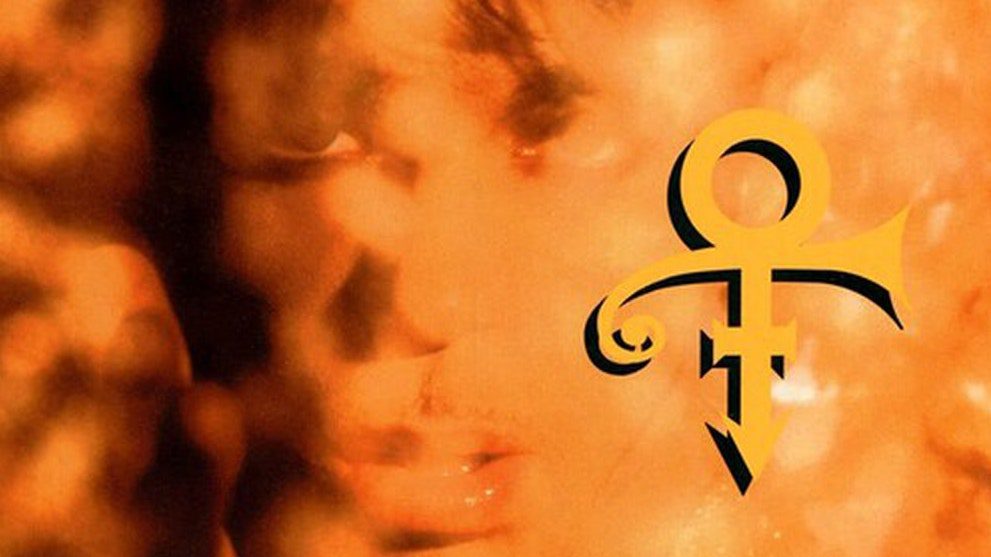
After reconfiguring the rock-based Revolution on Sign o’ the Times in 1987, Prince expanded his touring band to bring in horns and additional musicians on the magnificent Lovesexy shows. Since introducing the New Power Generation (NPG) on Diamonds and Pearls (1991), he had maintained the larger arrangements but skewed more toward groove. On this album and the live shows that led to it, the sound was stripped back to a harder-edged slam.
“The Lovesexy band was about musicality, a willingness to take risks,” Prince told me in Monaco. “Since then I’ve been thinking too much. This band is about funk, so I’ve learned to get out of the way and let that be the sound, the look, the style, everything.” (When we first met and he brought me onstage during soundcheck, he said, “I love this band, I just wish they were all girls.”)
Prince wasn’t only fighting with his label during the ’90s; he was battling hip-hop, the new, dominant form of Black pop music. For someone raised with such a strong commitment to musicianship, and so superhuman in both talent and discipline, the move away from instrumentation, chords, and melody was clearly confusing: He worked with such giants as Chuck D and Ice Cube (and toward the end of his life was in communication with Kendrick Lamar) but most of his attempts to bring hip-hop into his own music involved grafting the pedestrian Tony M onto the NPG for nonsense like “Jughead.”
On The Gold Experience, Prince finally reaches some kind of peace with hip-hop. In Rolling Stone, Carol Cooper perceptively noted that “as usual, the attempts at rap come off as part satire and part celebration of the form.” But the spoken word flow on “P. Control” and the (admittedly already dated) new jack swing-y beat of “We March” are examples of actually integrating the new form, using it for a purpose rather than just out of some sense of obligation to a young audience.
Speaking of new forms, The Gold Experience is presented as a mock virtual reality trip, with keyboard clicks and a robotic female voice introducing some of the songs (“This experience will cover courtship, sex, commitment, fetishes, loneliness, vindication, love, and hate”). It’s awkward but ahead of its time, and illustrates how Prince’s love/hate relationship with technology—like his battles with his record company—could be prophetic. “Once the Internet is a reality, the music business is finished,” he told London’s Evening Standard in 1995, four years before Napster.
Not surprisingly, the unifying theme that lurks within the lyrics of The Gold Experience is freedom. Sexual freedom, of course, had always been present for him, but other expressions of liberation appear throughout: creative control (“You can cut off all my fins/But to your ways I will not bend/I’ll die before I let you tell me how to swim” in “Dolphin”), political protest (“We March”), even feminism. “P. Control”—“Pussy Control,” until Prince was told stores wouldn’t stock a record printed with that title—is clunky and easily misread; one review called it the album’s “weakest, most juvenile and most sexist track.” But the subject is a successful businesswoman who turns down a rapper when he asks her to sing on his track, saying “You could go platinum four times/Still couldn’t make what I make in a week.”